
| This month, I attended two events in Versailles celebrating the 400th birth anniversary of the King’s Kitchen Garden’s founder Jean-Baptiste de La Quintinie. Here is a short commentary about the second one. |
One of the highlights of my few days in Paris this month was a conference held on Thursday 19 March at Versailles’ Open University by historian Florent Quellier, a specialist of food cultures. He talked about plants in royal kitchen gardens and how they featured in the meals of 17th century French aristocracy.
“Des salades, des petits pois et des poiriers : les potagers royaux et les repas à la française au temps de La Quintinie” (salads, green peas and pear trees: royal kitchen gardens and meals “à la française” at the time of La Quintinie) proved a hit as usual with Quellier.
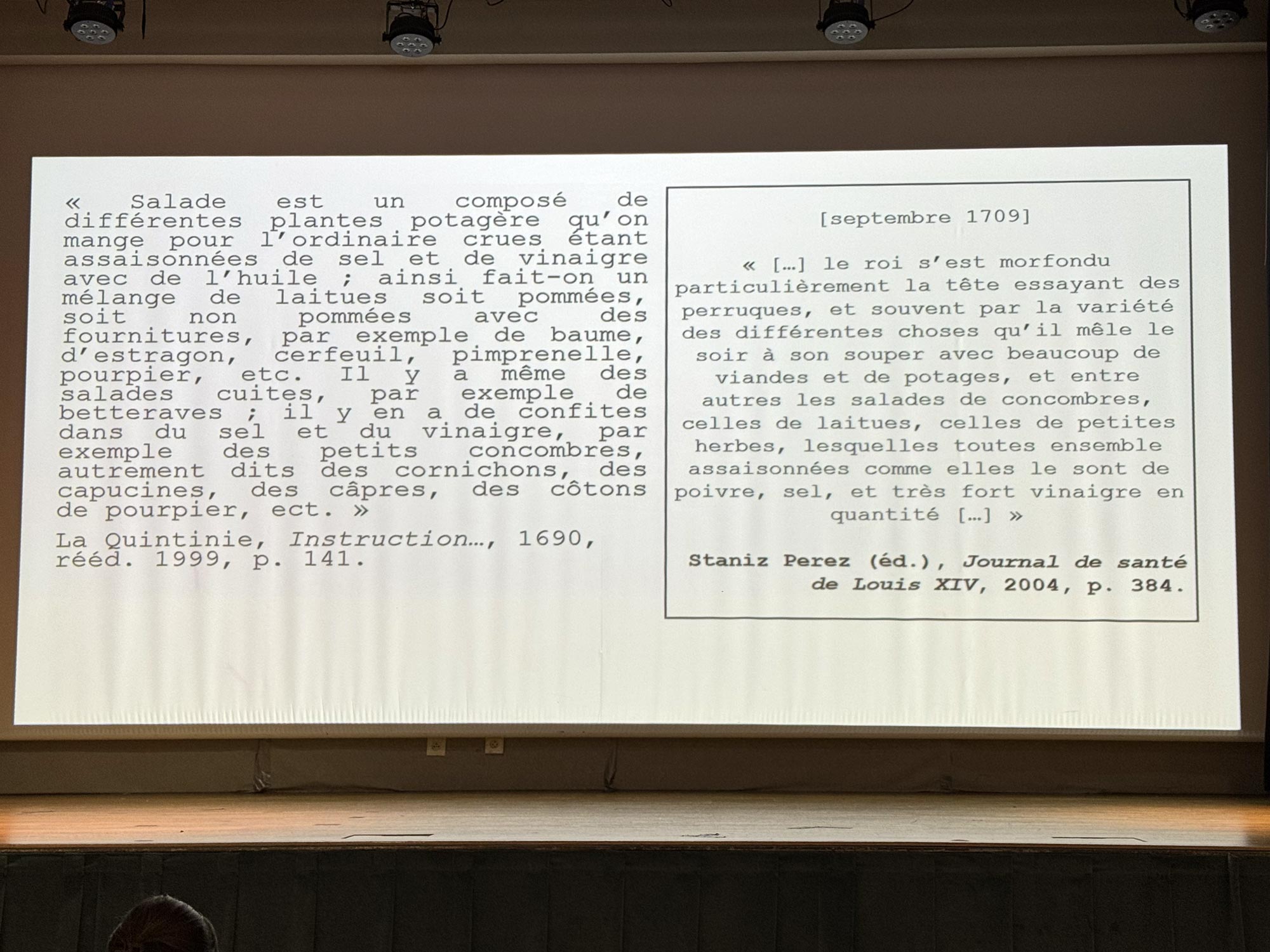
It also came with a pleasant surprise to me: French aristocracy was not solely focused on meat. They loved salad, in particular lettuce. I was amazed by the diversity of condiments, which they called “fournitures” (supplies) at the time, such as fresh herbs, edible flowers and other greens and vegetables which were used for dressing the elaborate salads.
Louis XIV who had health issues ate salads, as mentioned in his health diary (see picture below). Very modern I thought. A good story to refer to when advocating for healthy food?
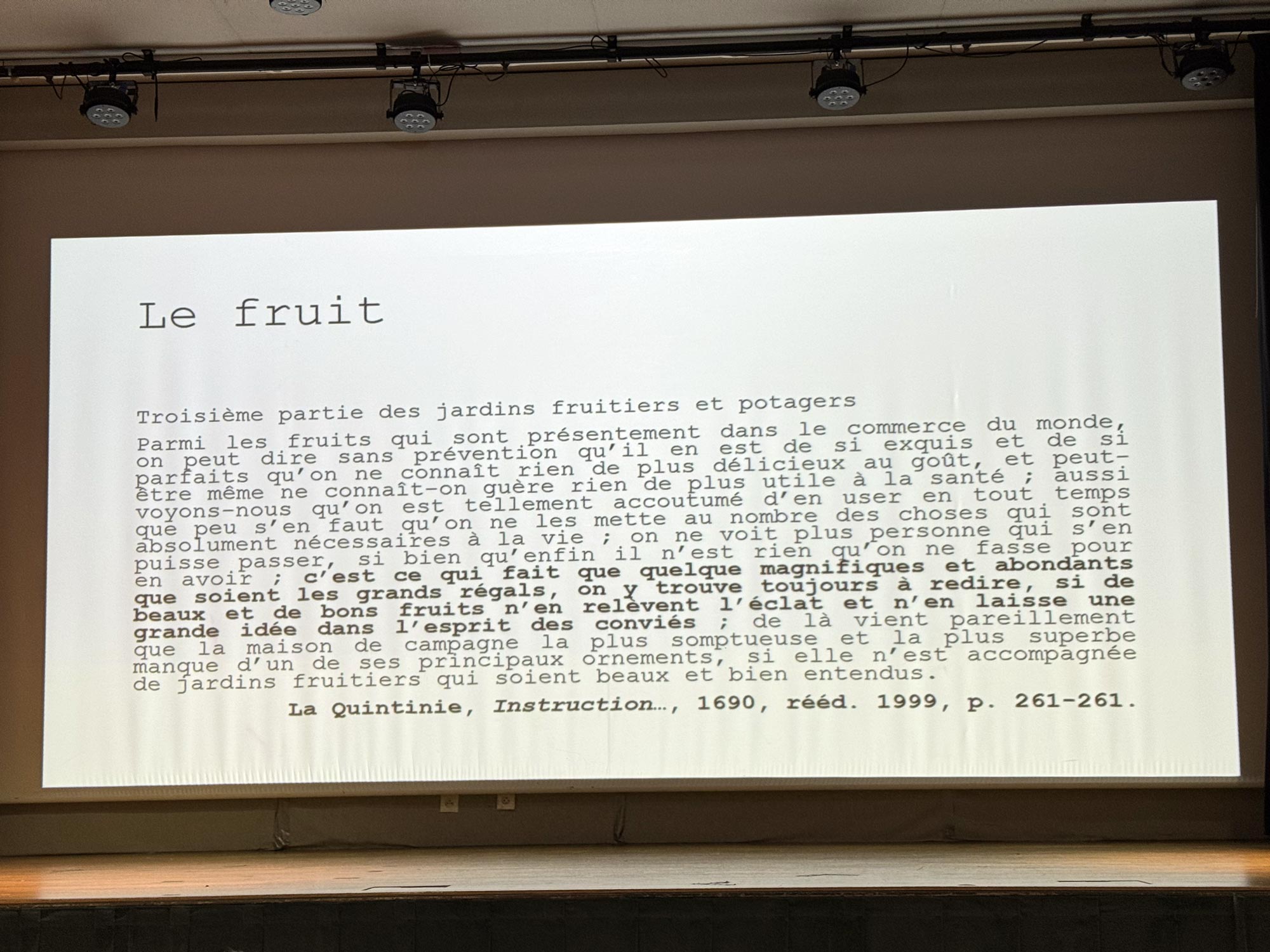
Florent Quellier also extensively talked about fruit. Jean-Baptiste de La Quintinie, who created “Le Potager du Roi” (the king’s kitchen garden) in Versailles on Louis XIV request, was a fan of fruit. In his posthumously published 1690 book “Instruction pour les jardins fruitiers et potagers” (instruction for the cultivation of fruit and vegetables), he wrote:
“Among the fruit currently available in the world trade, we can affirm without any doubt that some of them are so exquisite and so perfect that we don’t know anything more delicious in taste, and maybe even do we hardly know anything better for health.” (My translation. See original French version and reference in the image below).

 Les Jardins d'ici